For two decades the bargain between publishers and search engines was simple: let the crawler in, and readers would follow. The latest research suggests that bargain is breaking down, and faster than most media businesses planned for.
Fewer clicks, measured properly
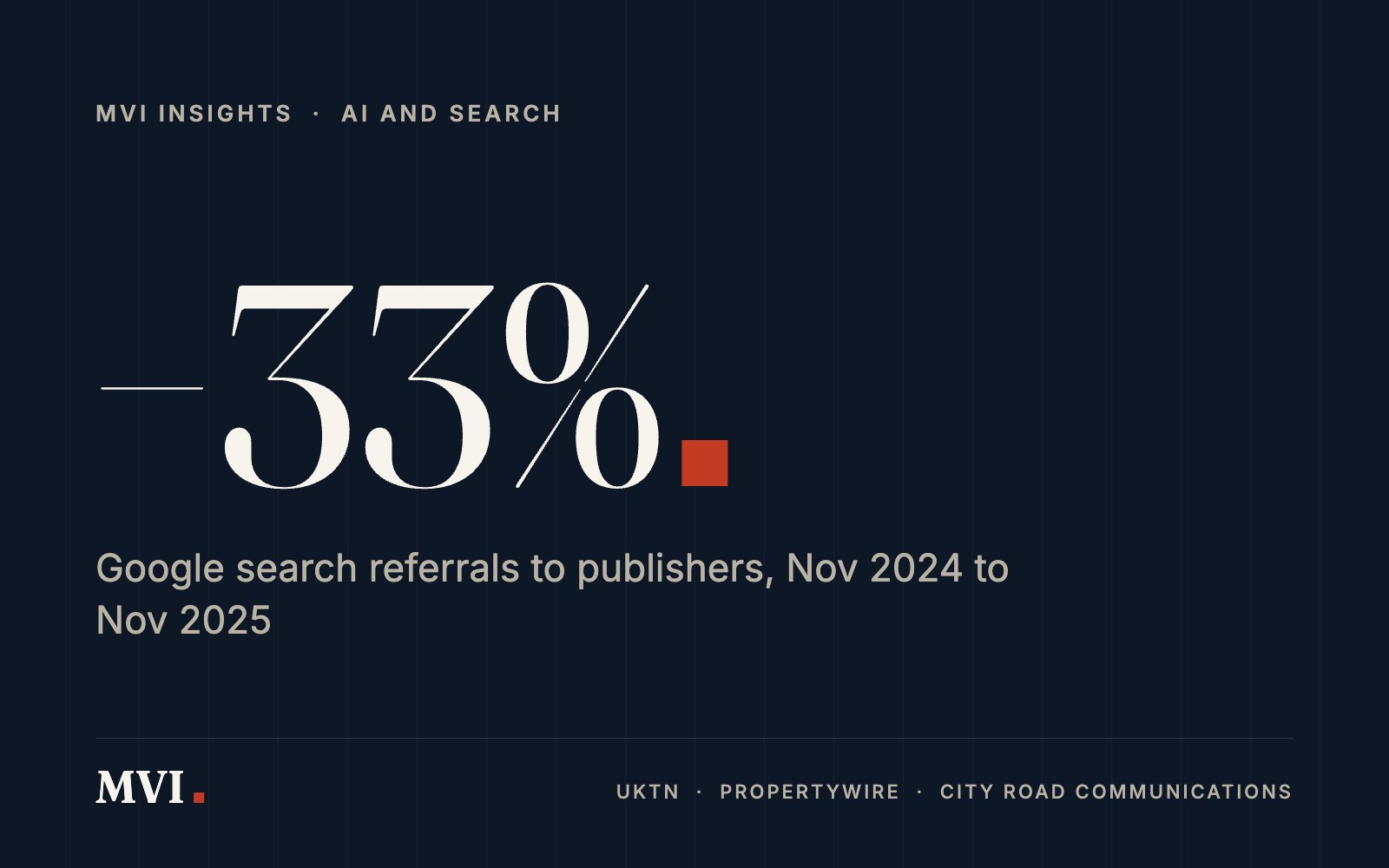
The Reuters Institute’s 2026 Digital News Report, published in June, found that organic Google search traffic to publishers fell by 33% globally between November 2024 and November 2025, and by 38% in the US. Publishers surveyed for the report expect a further 43% fall over the next three years.
Earlier evidence pointed the same way. Pew Research Center tracked the browsing of 900 US adults across around 69,000 searches and found that people clicked a traditional result 8% of the time when an AI summary appeared, against 15% when it did not. Only 1% of visits involved clicking a link inside the summary itself, and 26% of searches with a summary ended the browsing session altogether.
What makes 2026 different is that the evidence is now experimental rather than correlational. A preregistered randomised trial by researchers at the University of Pennsylvania and Northeastern University, published in August, gave 1,100 participants different versions of Google for a week. Moving people to AI Mode cut their click-through rate by 18.8 percentage points, and cut clicks to news sites specifically by 12.5 points. Removing AI Overviews increased clicks by 8.8 points.
The same study found something publishers can take some comfort from: AI Mode also lowered users’ trust, satisfaction and sense of usefulness, and pushed more of them to try a different search engine. Fewer clicks does not, on this evidence, mean happier searchers.
Chatbots are growing, but not evenly
The Digital News Report shows weekly use of AI chatbots for news rising from 7% to 10% across 48 markets, and to 16% among under-35s. The UK is an outlier. Only 4% of UK respondents use chatbots for news each week, the lowest of any market, and just 6% trust AI answers, against 20% globally.
That gap matters. It suggests British audiences still put more weight on named, accountable sources than on synthesised answers, even as the route by which they find those sources changes.
What this means for specialist media
For a general news site, losing a third of search traffic is an existential problem. For specialist titles the picture is more mixed. The audiences of UKTN and PropertyWire come for depth on a sector they work in, and much of that relationship runs through newsletters, events and direct visits rather than one-off searches.
The research points to three priorities for any publisher, and for any brand that relies on being found:
- Own the relationship. Newsletters, events and memberships are worth more when search is less reliable.
- Be the source, not just the result. AI tools still need original reporting and data to summarise. Being the publication they cite keeps you visible even when the click does not come.
- Measure differently. Clicks undercount influence in an AI-first search world. Brand search, direct traffic and citations in AI answers are now part of the picture.
Sources
- Reuters Institute, Digital News Report 2026
- Pew Research Center, Google users are less likely to click on links when an AI summary appears (July 2025)
- Wang, Gleason, Bart, Wilson and Metaxa, AI in Search Reduces Publisher Referrals Without Improving User Experience (arXiv, August 2026)
- Digiday on Digital Content Next publisher data (August 2025)